Why Chad?
Chad, a landlocked country in Central Africa, faces overlapping humanitarian crises driven by decades of conflict, extreme poverty, mass displacement, and one of the weakest healthcare systems in the world. Chronic food insecurity, unsafe water sources, lack of electricity, and limited access to education compound severe health outcomes, particularly for women and children.
The country hosts over 1.5 million refugees, including those fleeing conflicts in Sudan and Boko Haram violence around Lake Chad, alongside tens of thousands of internally displaced Chadians returning home with nothing.
Healthcare infrastructure is critically under-resourced, with minimal specialist care and severe shortages of trained medical professionals. Maternal and infant mortality rates are among the highest globally, and preventable conditions frequently become life-threatening, with over half a million orphaned children living without consistent support.
Chad faces a deep, multi-layered humanitarian crisis marked by chronic poverty, weak healthcare infrastructure, conflict spillover, and massive displacement.
Why We Deployed
In February 2019, Israeli Prime Minister Benjamin Netanyahu announced the renewal of diplomatic relations between Israel and Chad, which had been severed in 1974 due to strong pressure from Arab countries, led by Libya.
While political processes moved slowly, IFA identified a critical humanitarian gap: the Chadian civilian population, especially women and children, was receiving negligible medical support, as most international aid organizations operated under heavy security constraints and with limited reach to the local population, focused almost exclusively on refugee populations. Chad’s geography further complicates aid delivery, with lack of access to seaports, porous borders with terror-affiliated regions, and ongoing instability that make large-scale aid delivery both logistically complex and high risk.
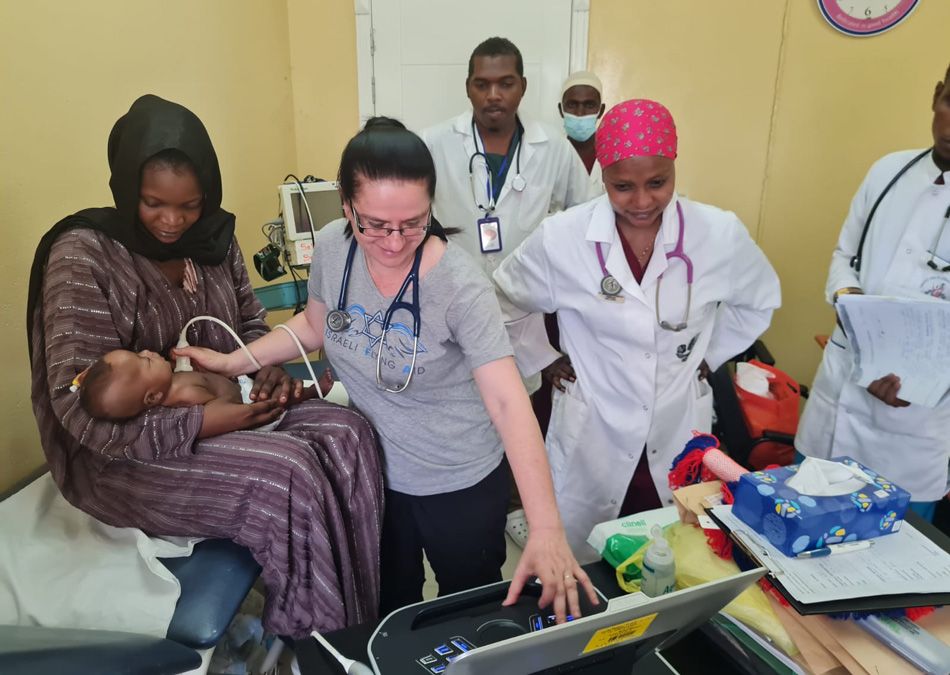
In October 2019, IFA deployed its first open civilian Israeli humanitarian aid mission, a first of its kind after many years in which our organization has been working away from the public eye and the media. IFA identified a rare opportunity to combine life-saving humanitarian action with people-to-people diplomacy.
IFA chose to act – professionally, responsibly, and visibly – deploying Israeli humanitarian expertise where it was most urgently needed.
“I played music in the middle of the desert. Children gathered instantly – laughing, singing. It was a moment that grounded me in what humanitarian work truly is.”
— IFA medical clown volunteer
What we did
Strengthening Life-Saving Medical Care
- Delivered dialysis machines, nearly tripling national public dialysis capacity.
- Supplied anesthesia and ventilation equipment to enable safe surgical procedures.
- Provided hospitals with mobility aids, nurses’ carts, and critical single-use medical supplies, including birth kits.
- Supported blood banks with donation kits and storage bags.
During IFA’s first mission, the entire Israeli delegation donated blood alongside local medical staff – an act that helped inspire Chad’s First Lady to launch a national blood donation campaign.
“We weren’t just delivering equipment – we were standing shoulder to shoulder with local staff, doing exactly what they do every day, but with tools they rarely have.”
— IFA Medical Volunteer
Maternal Health & Obstetric Fistula Care
Obstetric fistula, caused primarily by adolescent pregnancy and prolonged labor, is widespread in Chad and often results in lifelong medical, social, and psychological trauma.
Since 2019, IFA has worked continuously at the Obstetric Fistula Treatment Center in N’Djamena, the country’s primary facility for treating these cases.
IFA’s support included:
- Surgical treatment for complex and recurrent fistulas
- Introduction of advanced surgical techniques and equipment
- Hands-on training for local gynecologists and surgical teams
- Protocols aimed at reducing postoperative infections
- One 40-foot container of medical equipment valued at $300,000.
Many of the women treated had already undergone multiple failed surgeries before reaching the center.
“These women arrive after years of suffering, often rejected by their families. Restoring dignity here is as important as the surgery itself.”
— IFA Urogynecologist volunteer
Pediatric, Emergency & Intensive Care Training
Beyond direct care, IFA focused on capacity building, working side by side with local teams across hospital departments:
- Physicians and nursing staff trained in efficient Neonatal Resuscitation Program (NRP) protocols
- NICU medical staff trained in updated postoperative management protocols
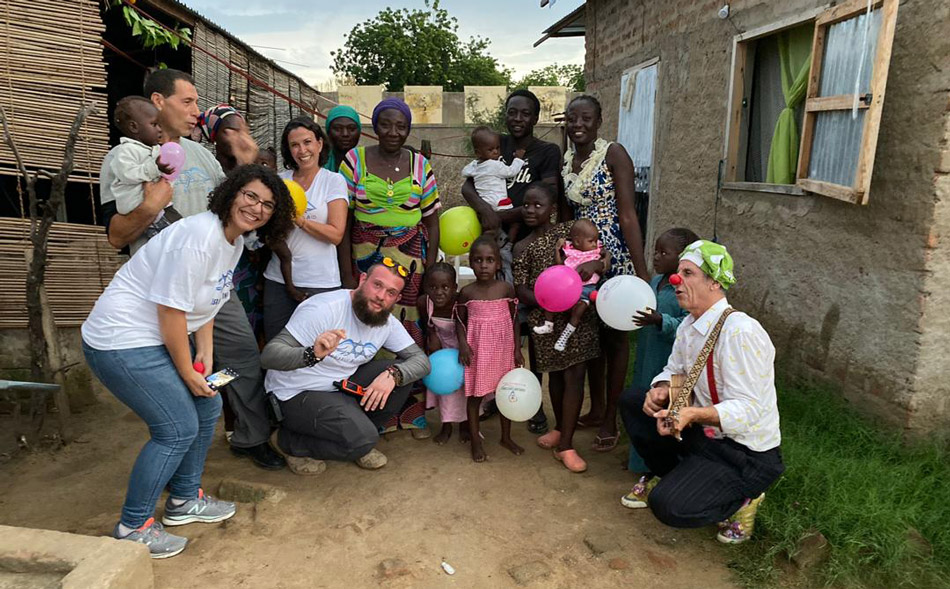
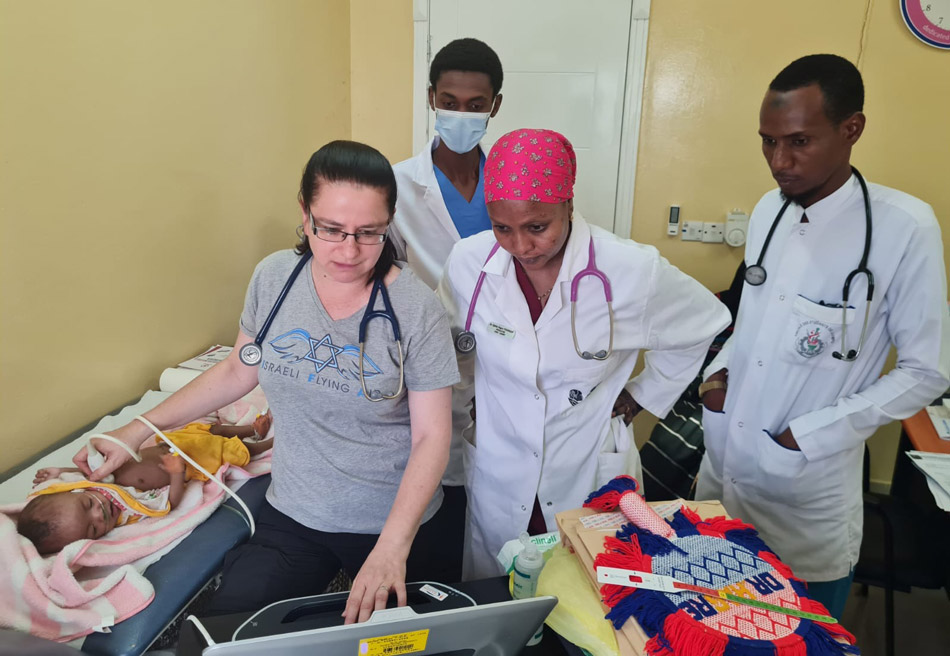
- Point-of-Care Ultrasound (PoCUS) training
- Assistance provided in complex and emergency cases in pediatric ICU, Neonatal ICU, and ED
- Noninvasive ventilation (BiPAP, CPAP) was instructed on and clinically implemented
“In a setting like Chad, one correct diagnosis can mean the difference between life and death. Training local teams to make that diagnosis is the real impact.”
— IFA Anesthesiologist & PoCUS Expert volunteer
Pediatric Cardiology
IFA’s pediatric cardiology team:
- Examined over 50 children and young adults with congenital and acquired heart disease
- Adjusted treatment plans with local physicians
- Trained adult cardiologists and pediatric emergency staff in pediatric cardiac evaluation
- Identified children eligible for life-saving cardiac surgery in Israel, in cooperation with Save a Child’s Heart
“There is no pediatric cardiologist in Chad. Every skill transferred here continues to save lives long after we leave.”
— IFA Pediatric Cardiologist volunteer
Care for Orphans & Education
IFA’s work extended beyond hospitals:
Two 40-foot containers of 40 tons of food (dried fruit and high-protein nutritional mix) were provided and distributed at N’Djamena’s suburbs and at Baga Sola refugee camp in Lake Chad.
Two orphanages were stocked with supplies:
- A solar power system was installed to enable a safer daily routine and more comfortable conditions for the schoolchildren.
- School supplies and infrastructure upgrades were provided
- Dry food was purchased for the two orphanages: a balanced diet, rich in vegetable protein, sufficient for 103,680 meals.
Humanitarian aid provided to the Fondation Dieu Bénit Orphelinat Orphanage, which IFA began working with during its’ first mission to Chad in 2019:
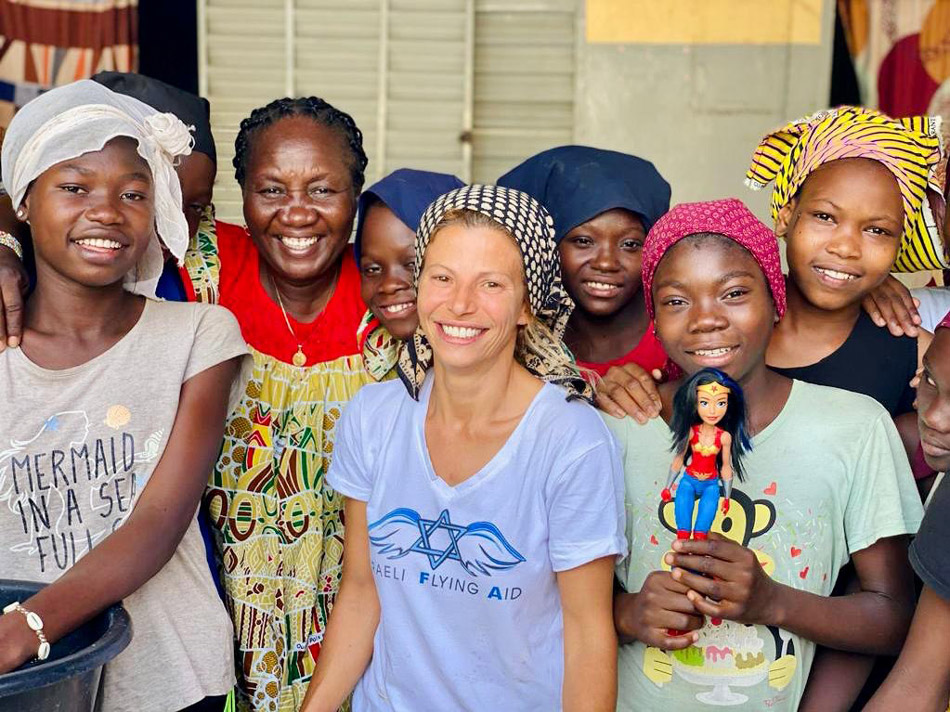
- Delivering food and medicine, for 8 months, to the orphanage housing over 120 children ages 6 months to 18 years
- Upgrading the electricity infrastructure and establishing WIFI service
- Establishing a remote connection for potential medical consultation
- Refurnishing the adjacent school providing education for over 300 children
- Building a smart classroom enabling digital education
- Assistance with routine pediatric cases at the orphanage
- OTC medications and antibiotics for children
“For these children, electricity, internet, and a classroom are not luxuries – they are a future.”
— IFA Logistics Volunteer
In September 2020, a Chadian military cargo plane landed at an Israeli Air Force base and was loaded by IFA with a full load of over 14 tons of emergency aid – 2000 tents for people left homeless following the terrible floods in Lake Chad area, COVID-19 protection gear for medical teams, equipment to assist in spraying pesticides that kills malaria carrying mosquitoes and more.
Looking Forward
Chad’s humanitarian needs remain high. IFA will continue to support local partners and develop sustainable programs that amplify impact over time, driven by the belief that every human life, regardless of location or circumstance, deserves dignity, care, and hope.